Jul 26, 2017
Mouse-Eating Trout
By Gavin James and Steve Fox Provided courtesy of Fish & Game New Zealand magazine
New Zealand has an international reputation for having a pristine backcountry trout fishery where anglers have the opportunity to catch large, wild trout. Yet as anglers who fish backcountry rivers know, these fish, while sometimes large, are normally long rather than well conditioned. Every few years, however, this pattern seems to change with some unusually high conditioned fish being caught. During the last two summers this has been particularly evident with numerous reports of record size trout being caught throughout the country. As a consequence, there has been much talk in angling clubs and reports in the popular press about the size of some of the fish caught and the apparent importance of mice as food for trout.
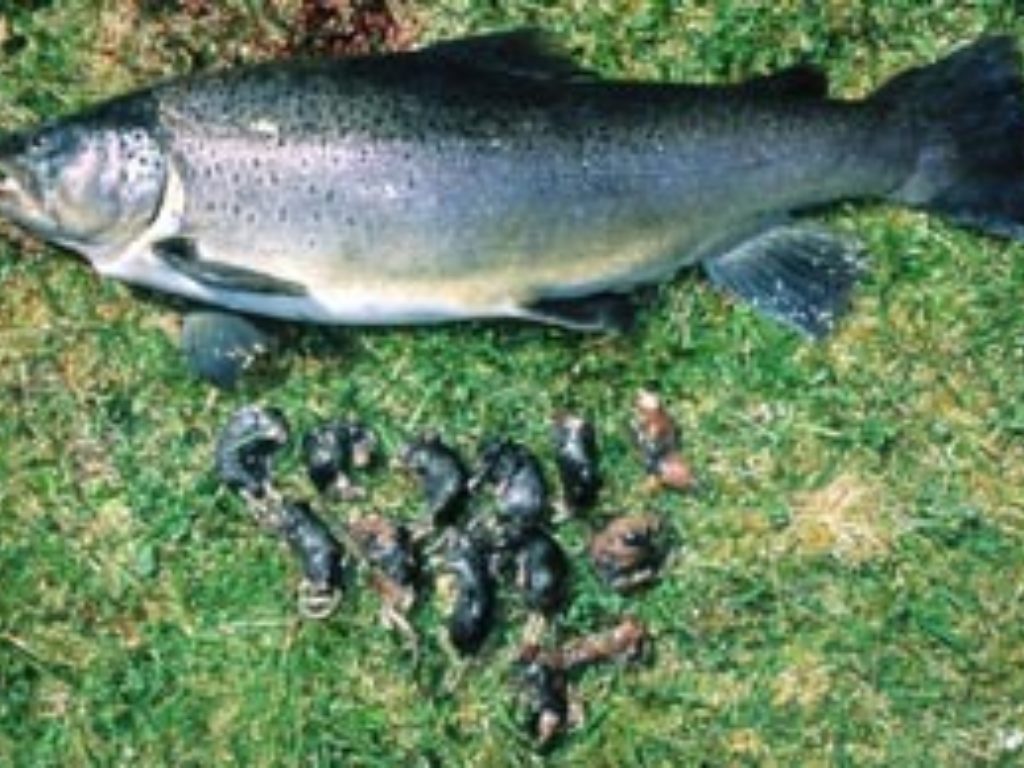
Our recent capture of a large brown trout containing mice stimulated our scientific curiosity and prompted an investigation into what is actually known of the relationship between mice and trout. We have attempted to provide some answers here to the more commonly asked questions that perplex anglers. What causes good beech tree seeding years, or "masting" years in botanical terms, and can they be predicted? What is the link between beech seeding and "mice plagues" and for that matter why do mice apparently enter the water so readily and end up becoming food for trout? Why do only some trout seem to catch on to this new food source and does this phenomenon only happen in New Zealand? Beech tree seeding has been the subject of scientific interest since the late 1950s, when it was first hypothesized that the sporadic seeding of beech trees leads to a cascading increase in the number of rodents, then stoats, and subsequent predation on native birds. Such a scenario is of concern to conservationists, as beech trees (Notholagus spp.) either dominate or are present in approximately 70% of New Zealand's native forests. While there has been no research on the link between beech seeding and trout growth, recent studies on food webs within beech forests are beginning to shed some light on the relationship.
On average, beech trees in New Zealand produce seeds in large quantities every three to five years. However, the last two years have been unusual in that seeding has occurred in consecutive years. Some forest communities have been studied for as long as 35 years and there is general consensus that temperature has a large role to play in triggering beech seeding. Hot conditions in summer stimulate flower bud formation, but it is actually the following summer before the beech trees produce flowers and several months after that (Febuary to May) before the seeds are shed. Thus there is a lag over a year between the warm temperatures and the production of beech seeds. The seeds then lie on the ground all winter and germinate in spring. Within a single year the intensity of seeding often varies between different locations and beech species, although overall there is significant synchrony among all the beech species over at least the entire South Island and lower North Island. Some seeds are produced in most years, but the amount varies extremely widely, from only one to five seeds per m2 in the lowest years to more than 12,000 per m2 in the highest.
In spite of temperature being a major factor in triggering beech seed production, there are different explanations for the mechanisms involved. One view is that the warmer temperatures result in increased photosynthesis and therefore greater production of flower buds. Another view is that temperature is merely a cue for flower production. It has recently been shown that beech gains a major pollination benefit from flowering synchronously at intervals, giving support to the second (cueing) theory. Different beech tree species apparently do seed simultaneously across various regions of the country, suggesting that there are large-scale climatic factors involved, notably El Nino and La Nina. However, it is also true that local factors, such as aspect and elevation, can modify the timing and intensity of masting on a local basis.
With global warming and the positive relationship between temperature and beech tree masting, it seems likely that beech tree seeding years may become more frequent in the future, with positive benefits for trout, but negative ones for our native birdlife. However if beech seeds more often, there won't be the chance for really big years to build up, so seed supply is likely to be more regular without the huge occasional surpluses now seen.
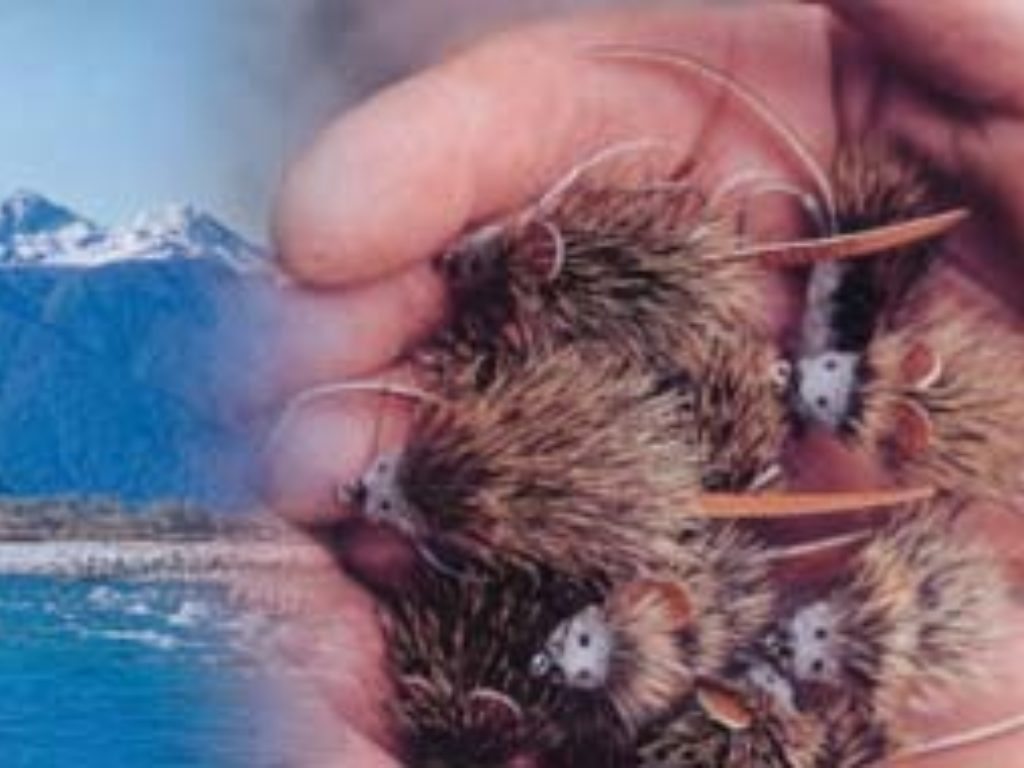
Mice are opportunistic feeders and are quick to exploit any increases in the abundance of seeds. Not surprisingly, analyses of mice stomach contents reveal that the huge numbers of beech seeds that can fall on to the forest floor (in extreme cases up to 10,000 per m2), form an important source of food during seed years. However, recent research on food webs within beech forests indicates other food items, especially insects, may also be important. Prior to seeding, beech trees shed surprising quantities of flowers and leaves. The resulting increase in the volume and quality of leaf litter triggers a population boom of insects, particularly caterpillars that live on the forest floor. As a consequence, during seed years mice benefit from a bountiful supply of food.
Mice, of course, have been introduced into New Zealand, along with the rats, stoats, and trout that now form parts of this beech forest food web. When well fed, mice are prolific breeders and can mature as young as two months of age, with litters being produced as frequently as ever), 20 to 30 days. In non-seed years, breeding lasts from spring through to late autumn, although this changes drastically during seed years when breeding extends through winter. Under these ideal conditions population densities continue to rise and generally peak in summer. However, it seems mice numbers started to decline in late February. We suspect this because one very experienced angler, who fishes South Island high country rivers extensively, noticed a marked decline in the condition of large mice-feeding fish in January and early February.
So how do mice find their way into rivers and the stomachs of trout? It is often thought that high population densities force mice to search for new areas, much as its overseas relative - the lemming - has often been portrayed as doing. Contrary to popular opinion, however, it is now known that lemmings do not commit suicide by jumping off cliffs into the sea. Back to the mice. It is now known that mice do not appear to defend territories when living at high densities in beech forests. In spite of this, it is still possible that their drive to find a new area is so strong that when they encounter a river or lake they make a brave, but often ill-fated, attempt to swim across. An alternative and simpler explanation is that as mice numbers build up, there are simply more mice around to fall into waterways and many mice that finish up in rivers may do so inadvertently. In the latter stages of a mouse plague, they are also likely to be very hungry and to search more widely for food.
Laboratory studies have shown mice have little fear of entering the water and are surprisingly good swimmers. Observations in New Zealand agree with this and there are even reports of mice being found up to 2km offshore and still actively swimming. On one occasion, one of us interested in the ability of mice to swim decided to see what mice did at night along a lakeshore in southern New Zealand. While standing on a beach, several mice ran down the beach quite close by, plunged straight into the water, and began swimming. There was no sign that they were being chased, so this seemed to be a voluntary action. But why would a mouse enter a lake with the apparently impossible task of crossing it? Perhaps from mouse-eye height it isn't possible to tell that a lake is not a river. Mice are primarily nocturnal creatures and no doubt darkness would add an extra degree of difficulty to judging the width of a waterway. So our guess is that such attempts are just examples of bad judgement by the mouse.
A related question is whether trout take mice that are actively swimming, or drowned individuals as well? As already mentioned, juice are primarily nocturnal and this coincides with the preferred feeding time of many large trout. Many anglers would appreciate that movement is a powerful cue that can stimulate uncooperative trout to take a fly or lure. A swimming mouse would probably be easier to locate at night and be more likely to stimulate a predatory response. Indeed, there are a number of anecdotal reports from both New Zealand and North America of trout taking swimming mice. This, of course, doesn't exclude the possibility that dead mice are also consumed. The large fish we caught was captured in the eye of a pool, above which there was several kilometres of rapids. In that position it is hard to imagine many mice successfully navigating the rapids and making it to the trout alive. This brings us to the question of trout selectivity. Why do some fish apparently relish mice, while others do not? On a recent trip into the headwaters of a large West Coast river, we landed 11 trout over two days, but judging from their condition only one of these had been feeding on mice. Several other fish landed were large enough to have been able to feed on mice, but their very average condition suggested they had not been doing so.
It seems that for larger trout, feeding on mice is a learned ability.
Indeed, the propensity for some individuals to specialise on one type of prey, while others in the same population don't, is a well known phenomenon among fish biologists and observant anglers alike. This specialisation occurs because fish are remarkably good at conducting "cost-benefit" analyses as they feed. As new prey types become available and more abundant in a lake or river, fish are at first reluctant to switch to that new prey type, even if at that point in time it is the more energetically-profitable prey (anglers who have encountered very selective trout would have witnessed this behaviour).
Such fish are reluctant to switch because they have become efficient at finding, identifying, and catching a particular type of prey. Switching to a new type of prey is probably viewed by the fish as an energetically "risky" operation, as they will have to change their behaviour so as to efficiently capture a new food item. Eventually though, as that new prey becomes more abundant, some individuals in the populations realise that they have been missing out on a lot of food and switch, and, in turn, become skilled at dealing with the new type of prey.
If the new prey type is extremely abundant, the whole fish population will eventually make the switch to that prey type. However, if there is not enough of the new prey to go around, you will often find a "divergent" feeding strategy, with some fish feeding on the new prey type and others sticking with the old, "tried and tested" food types. Again, anglers should be familiar with this behaviour. We are sure many readers would have contemplated alcoholism after throwing everything in the box at a pompous willow grub feeder, only to persevere, and hook a trout two pools upstream on the first cast with a big, ugly Hare and Copper!
With respect to trout and mice, those trout that make the switch to mouse feeding first may be monopolising the resource to the extent that other individuals never get to encounter mice frequently enough to make the switch also. We have some scientific evidence for this divergent mouse feeding strategy from a recent study by one of us (Rick Stoffels) on brown trout feeding habits in Lakes Manapouri and Te Anau. Here the length/weight relationship contained two quite different groups of fish those that had learned to feed on mice (and were much better conditioned), and those that had not. Also, using a chemical analysis technique that enables us to determine which prey types are contributing to the growth and production of the trout population, we are finding that some large trout may indeed be ultimately obtaining a significant amount of energy for long-term growth and reproduction from the beech forest, possibly through the mice. Further research being conducted over the next two years will shed lig on the importance of mice to the trout populations of Fiordland lakes.
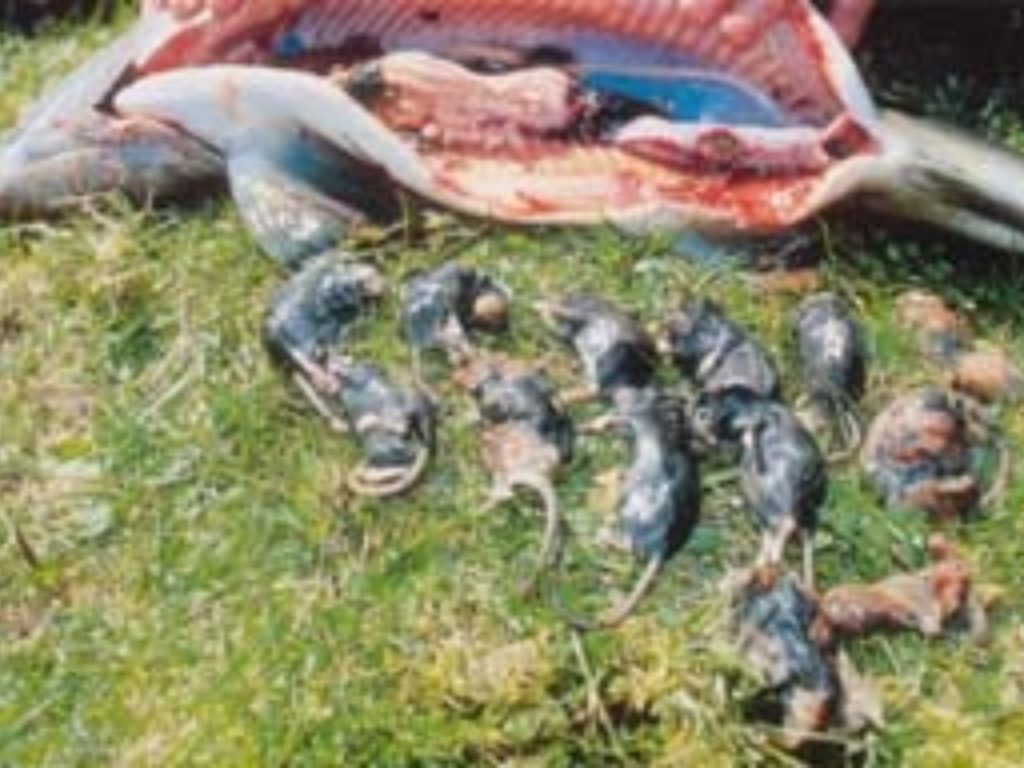
So how many mice can a trout eat? Since more than 90% of all trout caught in South Island backcountry rivers are released, most anglers never examine the stomach contents of large trout that have been feeding on mice. The brown that first triggered our interest was only kept because it was bleeding heavily from the gills and had a limited chance of survival This 3.4kg (7.51b) turned out to have 13 mice in its stomach. Of these, eight were intact and fresh and had probably been consumed during the previous night. The other five were partially digested, suggesting they had had been consumed two nights earlier. The total weight of mice in the stomach was estimated at about 0.25kg (0.51b) and raises the question as to why the fish thought it had to eat a size 10 nymph as well. Perhaps just to keep itself familiar with other food for when the mice supply ceased?
Although we were impressed with the appetite of our fish, the unofficial record may go to a Nelson Lakes trout that we were reputably told had eaten 23 mice. Anglers undoubtedly have other experiences of mice-eating trout.
And does eating mice make the flesh pale or give it an unpleasant taste? Well, our sample size of one suggests not, as it was a pleasant light orange colour and the taste attracted only compliments front the group of friends who enjoyed eating it with us, although they were not informed of its history!
It seems intuitive that feeding on large organisms like mice and fish must be considerably more efficient than feeding on smaller prey, such as aquatic or terrestrial insects. This was confirmed by a recent British study that compared growth rates of two groups of brown trout - one fed on fish and the other on insects. On a diet of fish, trout grew approximately three times faster than when fed on insects. The increased growth rate was influenced by two main factors. Firstly, gram for gram, fish were energetically richer and more easily digested than insects, and secondly, trout could pack a greater volume of the larger items into their stomachs. It seems likely that this also applies to trout feeding on mice and the accompanying photograph of the distended stomach of the fish we caught graphically illustrates this. It is also probable that feeding on a small number of large food items would reduce foraging times and the energy expended in acquiring food. Resources could then be directed towards rest and digestion. Such a theory fits in with dive observations in Lake Manapouri and Te Anau of very large rather obese-looking brown trout resting tinder logs during the day, presumably digesting the mice meal from the night before.
Rodent-eating trout are not unique to New Zealand and have been widely reported in the popular literature for a wide range of salmonids including rainbow, take, bull, and brook trout in North America. Indeed, on the Alagnak River in Alaska, large rainbow trout are targeted using vote (a tundra mouse) patterns. There is also evidence that rodent population cycles in North America are linked to fluctuations in the abundance of tree seeds, at least in eastern United States where abundant crops of acorns have been linked to increases in white-footed mice, as well as chipimunks, deer, and lyme disease!
Recent research has confirmed that most of the brown trout found in headwater rivers are actually males. This is apparently because most females, which require more food than males to recover their energy resources after spawning, move downstream following spawning to the lower reaches where forage fish are more plentiful. Perhaps it is because many of these males are already long for their weight that they have the capability of putting on condition relatively quickly when a new food source appears.
It seems there is still much to learn about the importance of mice as food for trout and we would welcome any information that might add to our understanding of this phenomenon.
Contact the authors: Gavin James (g.james@niwa.cri.nz) and Steve Fox (s.fox@niwa.cri.nz) or NIWA, Box 8602, Christchurch; or Rick Stoffels (stori563@student.otago.ac.nz) or Zoology Dept., Box 56, Dunedin. And who knows, if the greenhouse effect does result in the increased temperatures that are being predicted, we may see more big mice-fed trout in our beech forest headwater rivers.
END.
Contact us to plan and book your NZ fly fishing adventure.