After one honeymoon summer fishing New Zealand’s spectacular fly rivers and streams, Canadian photographer David Lambroughton was hooked: 25 years later he is still to miss a season.
Story and photographs: David Lambroughton
As a photographer specialising in fly fishing, it has been easy to fall in love with much of what I’ve seen through my lens: the big brawling salmon rivers of Norway, the massive sunsets over Argentine trout waters, the lush spring creeks of Montana, or the lovely steelhead pools on British Columbia streams.
But nothing has quite compared with springtime in New Zealand and the new trout season. In all the world you won’t see greens so green or skies so blue, all framing the clearest trout rivers on the planet, where the fish seem to be suspended in mid-air, hanging over their own shadows.
Every southern hemisphere spring for 25 years it has drawn me back to its varied pleasures, from the large river estuaries meeting the sea and the tides to the small streams high in the mountains. My usual approach has been to take my time and fish my way from north to south, starting on the North Island and arriving some months later in the South Island’s high country just as autumn displays its full colours.
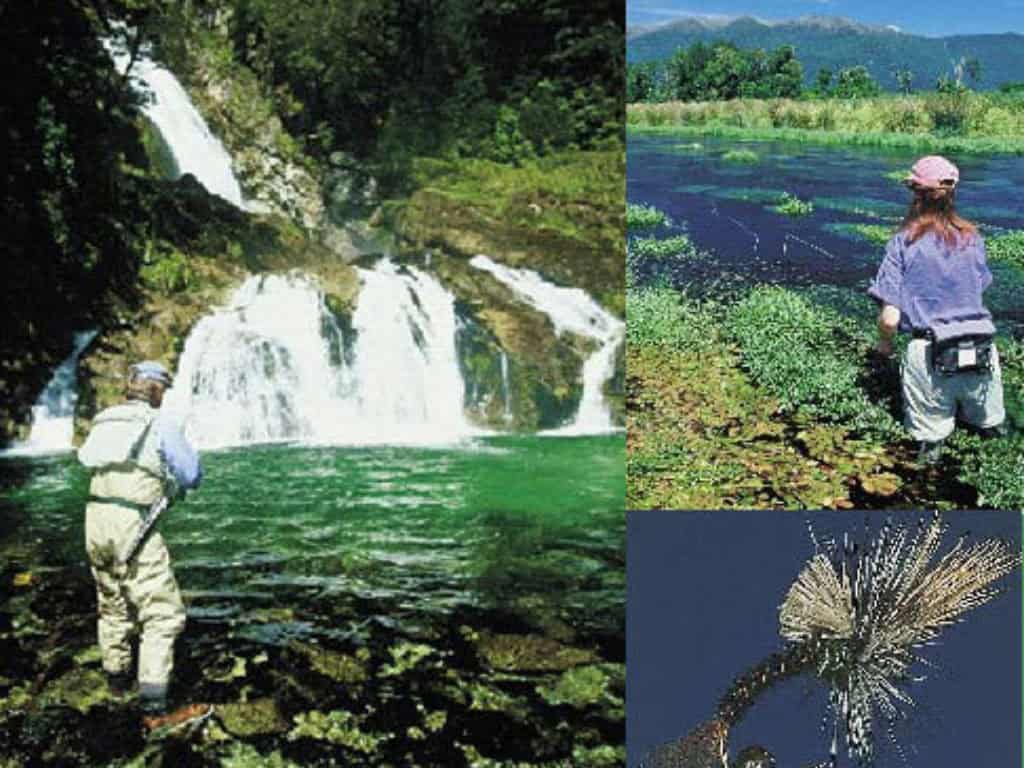
Above left: A steep river on the South Island’s West Coast. Top right: South Island scenery. Bottom right: Nymphs can fool the smartest fish.
Last year I was right on schedule for my autumn date. By late March the mornings are cool again, as was this one as I drove across the South Island from Te Anau to Queenstown. I was on an angler’s road and, as I crossed the bridges, I gave the rivers that quick look, judging their colour and flow and remembering big fishing days on them over the years. Just before Lumsden, I took the road north that leads to Queenstown and stopped at one of the several access points along the upper Mataura River, known for its fairly reliable mayfly hatches, especially in autumn, and lots of one to two kilogramme brown trout that like to rise.
With more than 100 kilometres of good trout water, the Mataura makes anglers who love fishing Montana rivers feel right at home. But on that day I kept heading north. I was anxious to get up to the little town of Omarama and check in to the wonderful little Sierra Motel, which, like the Kiwi Park Motel in Murchison (southwest of Nelson) and the Creel Lodge in Turangi, has long been a gravitation point for fly fishers.
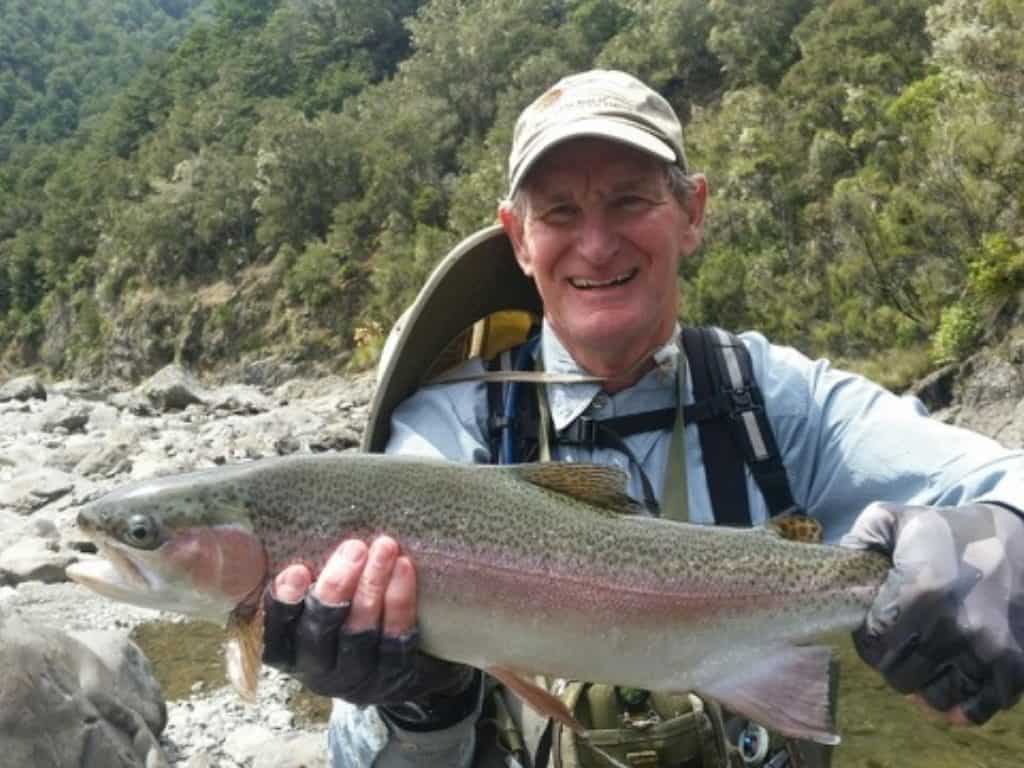
Omarama is a wonderful place to be as the autumn colours cascade down the mountains and rivers. The winds of summer that can scour the valleys, making casting difficult, have largely subsided. The rivers are usually low and clear, and easy to cross at the tailouts of the pools. It’s a fine time to hike up a river and sneak up behind feeding fish. For me it was also a good time to go visit an old friend. The next morning I got up early for breakfast and tossed a sandwich and a few drinks into my chilly bin. I then headed south to the Birchwood Station Road, turning up the Ahuriri River Valley.
After 25 summers, I now return as much for the magnificent scenery as I do for the fishing. But in 1980, it was a different story as I dragged my young wife from one trout river to another in that first honeymoon summer. I had heard so much about New Zealand trout fishing that I just could not stop to smell the roses or go for any walk that didn’t lead to trout water (yes, she still brings it up occasionally).
On that first visit in 1980 we had rattled the old camper van up river about 20 kilometres and stopped to look at the Horseshoe Tarn, a spring-fed old oxbow of the river. Sitting motionless at the water’s edge was an elderly gentleman. Pulling over to a flat spot, we watched him as we had lunch. Suddenly, his rod came up hard and the mirror-like surface was shattered. The first 10-pound (4.5-kilogramme) trout I had ever seen was in the air. We rushed down to watch this battle, and about 15 minutes later the fish was landed, admired and gently released. That’s how we met one DM Hunter of Dunedin, 85 years of age, an immigrant from Scotland, and just finishing his 60th trout season. “Suddenly, his rod came up hard and the mirror-like surface was shattered.”

For the next week we spent lots of time with Mr Hunter. He would drive us around the valley in his Range Rover, showing us his favourite pools, and telling stories of big fish. At daybreak we’d fish the calm ponds with the morning sun on our backs, and try to intercept cruising fish with our flies. We’d get a couple most mornings, but never as large as that first 10-pounder. What a privilege it was to meet this man, and what a perfect way to end that first season.
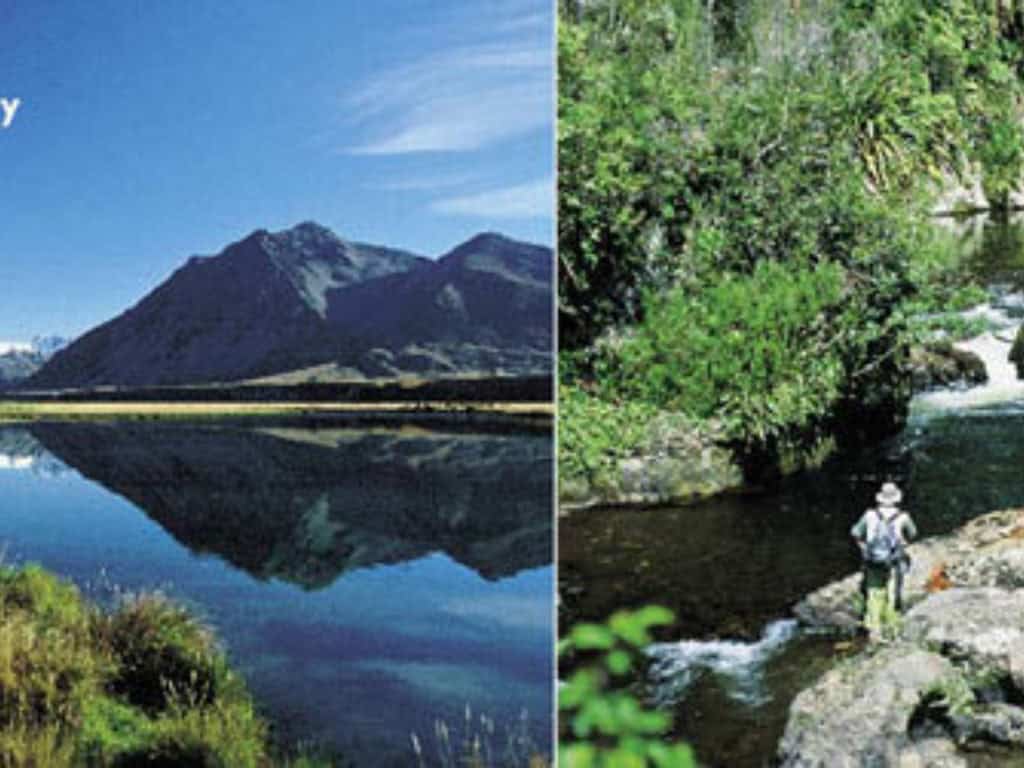
Above: Double-handed rods are becoming popular again on the Tongariro river.
When I got home to British Columbia that April, I got my film developed and found a shot of Mr Hunter that I really liked: he was sitting beside the Horseshoe Tarn, with the snow-capped mountains perfectly mirrored in the surface. I decided to send it in to a photo contest by Fly Fisherman magazine. The picture coverstory won second place. I immediately sent him a copy of the photo and the magazine. About two months later, a letter arrived informing me Mr Hunter had died. But a torch was passed and every year I try to return for at least a few days to photograph the valley and to fool a few of those large trout. New Zealand fishing has held up beautifully over those years; the big fish are still there, although they are certainly smarter.
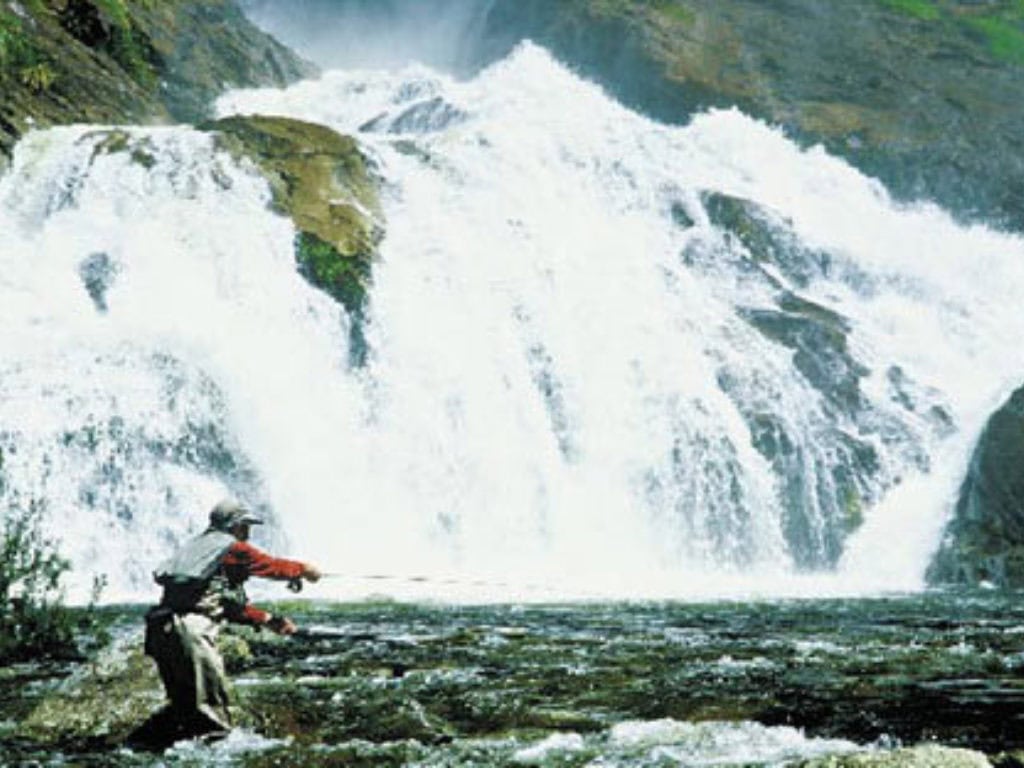
As I find on many New Zealand rivers, by the time anglers acquire the skills to fool the large trout they have almost always become the kind of anglers who handle the fish gently and release them without a second thought. After 25 seasons, it’s easy to see how first-time visitors can waste a lot of time trying to figure things out. I certainly did. For me the biggest lesson was how to hunt and spot fish – always working upstream instead of fishing blindly and spooking fish with poorly placed and disturbing casts.
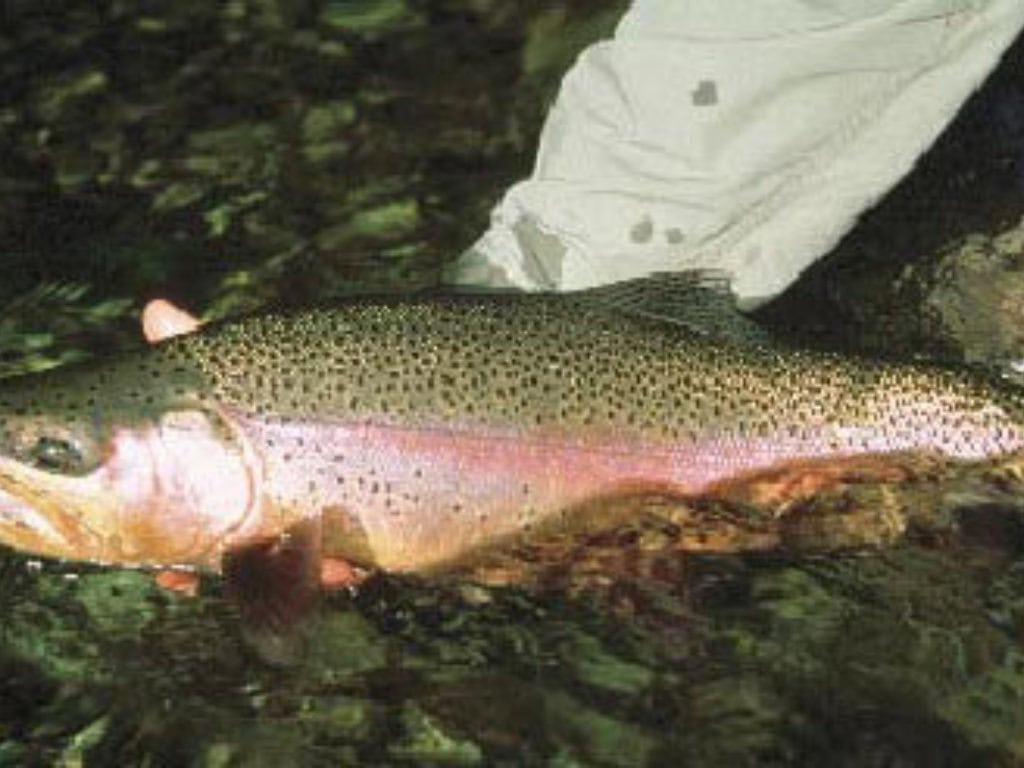
This is not to say that New Zealand does not have rivers that lend themselves to blind fishing. The smaller North Island streams certainly do. But by and large, what draws the anglers in every year from all over the world is the opportunity to walk up a river and drop flies in front of large, feeding, spotted fish that can easily average two kilogrammes and, on some rivers, considerably more.
The reason they grow so large is that there are fewer of them in the rivers than in the northern hemisphere. They have more to eat and a longer season to enjoy the bounty, unlike their North American cousins, who must survive dark winter months in rivers covered with ice and snow. The first trout anglers in New Zealand knew all about being shut out of the best fishing waters in England, Scotland and elsewhere, with their private fishing clubs and deep-pocketed members. They have made sure the country≠s rivers are open to all (although you should always ask for permission before crossing someone≠s property). Thus, you can get off the plane, rent a car or a camper van, stop and buy John Kent≠s North Island Trout Fishing Guide and South Island Trout Fishing Guide, and go to it. Along the way, you can stop at the local fishing shops, such as Mike Stent≠s Fly & Gun Shop in Taupo, to ask your questions, buy a few flies and obtain good, solid information and some Xs on your map.
But while discovering things on your own can be a fascinating and rewarding process, it can also be very slow. Most of the seasoned locals and annually returning anglers √ the ones you see holding the big fish in magazine stories √ will attribute much of their success to working with their favourite fishing guides. In New Zealand, fishing guides take on a whole new level of importance. They have to make their plans around so many variables √ the often unpredictable weather and winds, the fitness and skill levels of their clients and the recent track history of where other people have been fishing √ as they try to find happy, undisturbed feeding fish for their clients. Add to this carrying a pack all day with lunches, fish spotting and late-night phone calls to other guides and some helicopter pilots, plus keeping their cars running after thoroughly thrashing them all season long on back country ≥roads≈ and river crossings, and I believe they earn every cent they make.
About 90 per cent of my very best fishing days, happened because I was with some top fishing guides, such as Dean Bell of Te Anau, Nigel Birt of Methven, Dave Heine of Greymouth, and Pete Fordham and Mike Stent of Taupo. All these fellows have great senses of humour, which comes in handy when you make a bad, disturbing cast to some jumbo fish which then slowly sinks into the depths!
Fishing with guides is teamwork at its best √ spotting fish, especially in poor light, is what their eyes have been trained for. When you walk up the river with them they go on point, like good bird dogs, often on fish that you would have easily missed. Then you just need to clamber down the river bank and quietly move into a good casting position. However, as often as not, you could now be looking into a shine, reflecting the sky, no able longer see the fish. This is where the guide chimes in with the playby- play: ≥Next cast two feet up and three feet to your right≈, ≥He had a good look at it, so change your fly≈, or ≥He≠s still feeding≈, so you know the game is still on. At the end it is either, ≥He≠s got it≈, or the dreaded, ≥He spooked≈. But one thing≠s for sure √ two people can catch more fish than one. As for the season, I tend to divide it into three. In the early, spring season √ November 15 to Christmas √ you have to deal with more rainy, blustery days but the fish are well-rested, hungry and will never be easier to catch. Along the South Island rivers, the multi-coloured lupin cover the river banks and islands, while guides, motels, flights and car rentals are much easier to book.
Fiordland rivers are restricted to foot or boat access – no helicopters allowed. In mid-season √ summer: Christmas to February √ things get considerably busier and warmer. The kids are out of school, it≠s holiday time through most of January and the roads are seeing more traffic. Come February, the busiest month for overseas anglers has arrived, the best-known fishing lodges are full and the helicopter companies are happy with the extra work. But, as a lodge owner once told me, ≥February is our busiest month but not necessarily our best fishing month. I think it is the best month for people to escape their northern winters.≈
“In the early season, the fish are well-rested, hungry and will never be easier to catch.”
Come the glorious month of March, though, things quiet down and this late season, which runs well into April, is hard not to love. The rivers are low and clear and easier to wade in and cross. The days are cooler and winds of summer almost a memory. The fish now respond to large, bushy, dry flies. Along South Island river banks, thriving populations of black and white oystercatchers bunch up ahead of their big flight north. In the North Island, the first few autumn rains bring the first runs of fish out Lake Taupo and into tributaries like the famed Tongariro River. In Graham Wyman≠s Sporting Life store in Turangi, anglers pour in to get the latest reports and the excitement grows as the winter season draws closer.
But whatever season you choose for fly fishing in New Zealand, you want to be careful √ one trip can open the door and your heart to many others.
Equipment Essentials
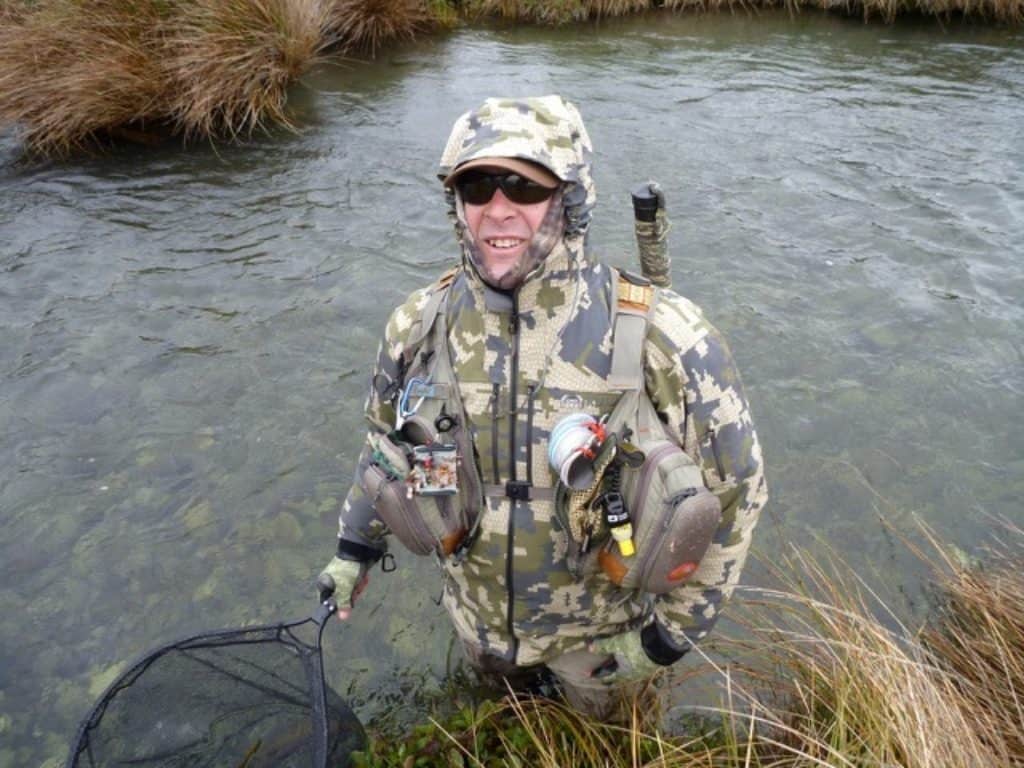
Light fly rods in the 4 to 6 weight range are perfect for the common 4X and 5X tippets that you≠ll be attaching your flies to. As for your fly pattern selection, those heavy hatches that trigger selective feeding are uncommon, so you can keep your fly box fairly simple and rely heavily on the basics: small weighted nymphs in sizes 12 to 16 in common patterns such as Hair & Copper or, my favourite, Pheasant Tail Nymphs. Add to these a few larger rubber-legged stonefly nymphs in sizes 6 to 10, for fish lying in deeper or faster water. For dry flies, the reliable Adams in sizes 12 to 14 will work surprisingly well all season long and be sure to add some terrestrial patterns such as Hoppers, Beetles, Spiders, especially for the second half of the season. The most important thing your guide will want you to arrive with is drab, earth-coloured clothing. Because New Zealand waters are so clear, a neutral-coloured fly line (such as grey or brown) works best. If you have brightly coloured fly line, you can get the first seven to 10 metres dyed for you so you don≠t need to buy an entirely new line. This will help you sneak up the clear rivers, spook fewer fish and become a better predator.
Recommended to help organise your trip, if you are coming from the US: The Best of New Zealand Fly Fishing, a California travel agent specialising in fishing.