Recently a client asked about what to expect from a trip to New Zealand in April. We thought it would be a decent opportunity to follow up on Mike’s post from a past newsletter and provide a little more in depth information than found on the seasons page.
Fewer Anglers, More Space
As autumn begins to take hold across New Zealand, April presents a unique window for anglers on the North Island. The peak-season bustle starts to fade and the landscape begins to shift into crisp golds and greens. April in New Zealand is equivalent to October here in the USA. The rivers settle into a quieter rhythm and we have found it is the ideal time best for those seeking a more intimate and technical fly fishing experience.
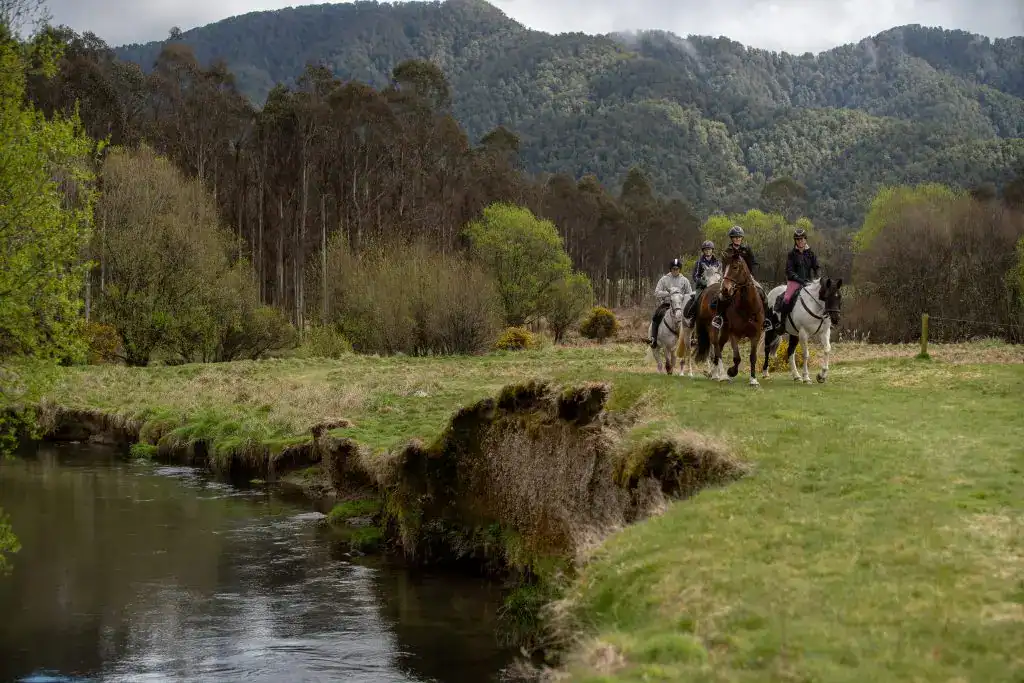
April marks a natural slowing of the season. Many international travelers from the USA have come and gone. Easter is a big holiday in New Zealand and Australia, so there can be New Zealanders on the river around those days, but overall the riverbanks feel less trafficked. With fewer anglers on the water, there’s a sense of stillness that allows for more thoughtful, deliberate fishing. Guides appreciate this shift too, as it offers a chance to move at a different pace—often including opportunities for backcountry day trips or even early-season campouts, depending on weather and access.
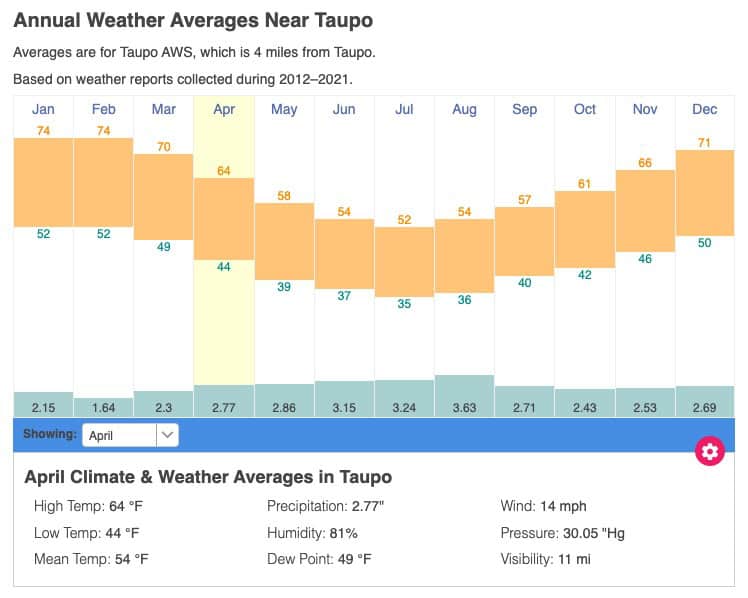
The best part? Weather tends to be settled during this time, with cool mornings and evenings giving way to mild, stable days—conditions that favor a variety of fly fishing techniques. Ref: Time and Date
What Fishing Looks Like in April
New Zealand fly fishing is synonymous with the dry fly and in April opportunities to throw a dry will certainly begin to slow, but it doesn’t vanish entirely. In some locations and under the right conditions, dries—especially smaller or attractor patterns—can still produce. However, most success during this time comes from a more nuanced approach.
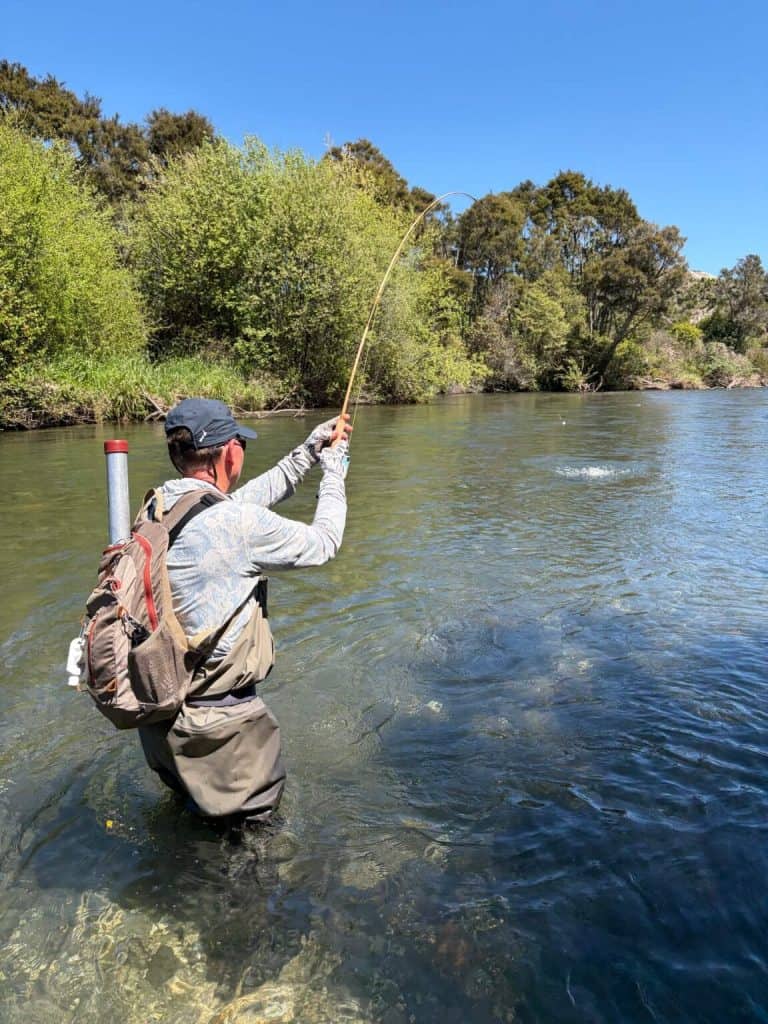
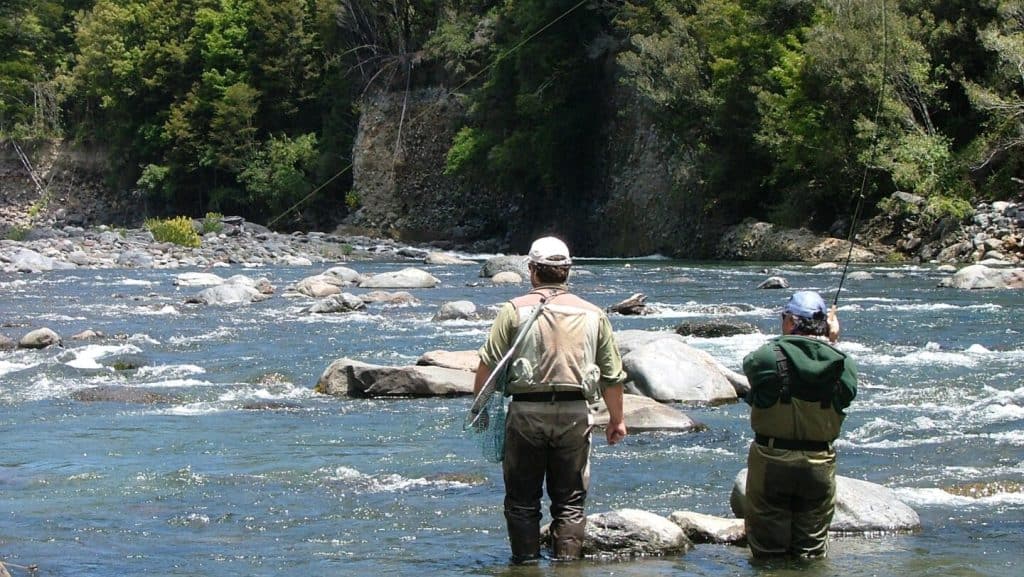
April is an excellent time to return to a dry-dropper setup, allowing you to probe different depths and entice fish that may be less inclined to rise. The clear autumn light often improves sighted nymph fishing, and experienced anglers know that this is when presentation becomes so important! Long leaders, fine tippets, and drag-free drifts are essential whenever fishing New Zealand.
Later in the month is also when streamers can shine. In deeper pools or along structure, stripping larger flies may trigger strikes from aggressive trout preparing for colder months with fewer feeding opportunities. As water temperatures dip, smaller nymphs can outperform their bulkier counterparts. This is why it’s so important to have a good guide- so they can help adjust patterns to match insect activity—it can make all the difference.
Timing Is Key
The first half of April, perhaps the first two and a half weeks, is generally the most productive. The time zone change will mean sunset occurs an hour earlier (around 6pm), but still allows for a full day of fishing assuming you start after breakfast and fish until four 4pm (as an example).
The net is that in early April, water levels are typically manageable, weather patterns remain consistent, and the full shift into late autumn hasn’t yet taken hold. After mid-month, rivers across the North Island remain open in many areas, but guides may begin redirecting efforts toward lower-altitude or lake-fed systems, where fishing holds up better into the cooler season.
A Month for the Patient and Observant
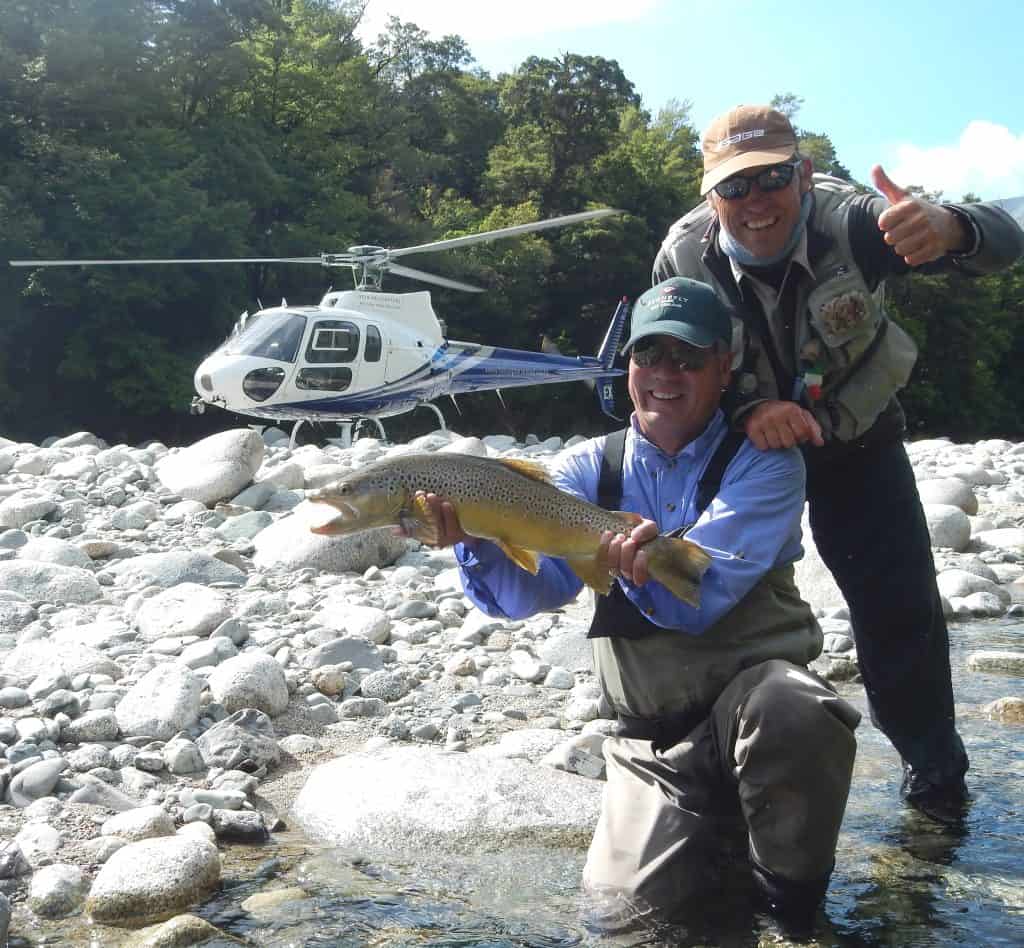
Make no mistake— April is a quality-over-quantity time of year. Trout have seen their fair share of flies in more popular areas, and success is earned through thoughtful approach, accurate casting, and close observation. But that goes for everywhere in New Zealand, doesn’t it?
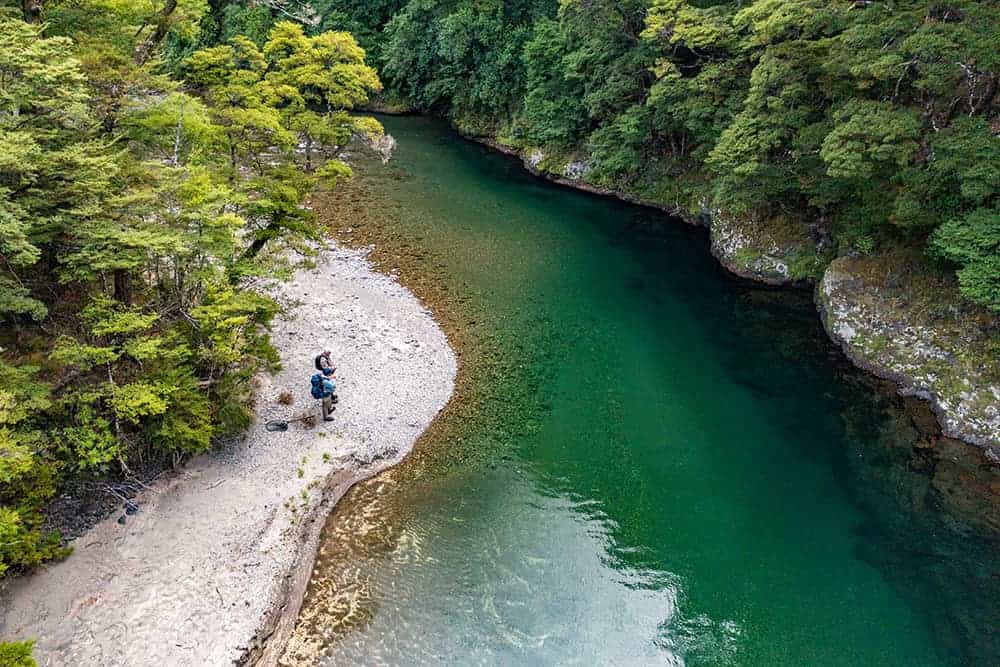
For anglers who enjoy a challenge, April offers the kind of refined fishing experience that is both rewarding and memorable. If your ideal day includes solitude, stalking, and sight-fishing in pristine wilderness, April on the North Island offers a quietly spectacular finale to the summer season.
Contact us today to start planning your April fly fishing adventure in New Zealand. Let’s make your next cast count.