New Zealand Fly Fishing Itineraries and Travel
When you book direct you will pay a retail rate a tour, lodge or accommodation. While we have contracts that allow us to book wholesale. Thus, when you book through our team you are not going to pay any more out of pocket because you are paying retail. It’s where you cut the check that differs, but the ultimate number you write on the check does not.
However! We provide more than simply booking accommodations for you! Working out all of the details for your trip and providing a clear itinerary- especially for more complex travel situations (multiple flights, multiple locations, etc.) our service mitigates the risk of a bad trip and increases the chance of a great trip.
We know the internet exists and people will always price match. So we provide transparent pricing through an itemized itinerary. You can see exactly what you are paying for every aspect of your trip. Thus when you book through Best of New Zealand you are leveraging our expertise without paying more out of your pocket.
Price will depend on the class of service for air, the time of year you plan to visit, how long you visit, the number of people in your group (to split costs), the level of accommodations, the number of activities, how many days you fish, etc.
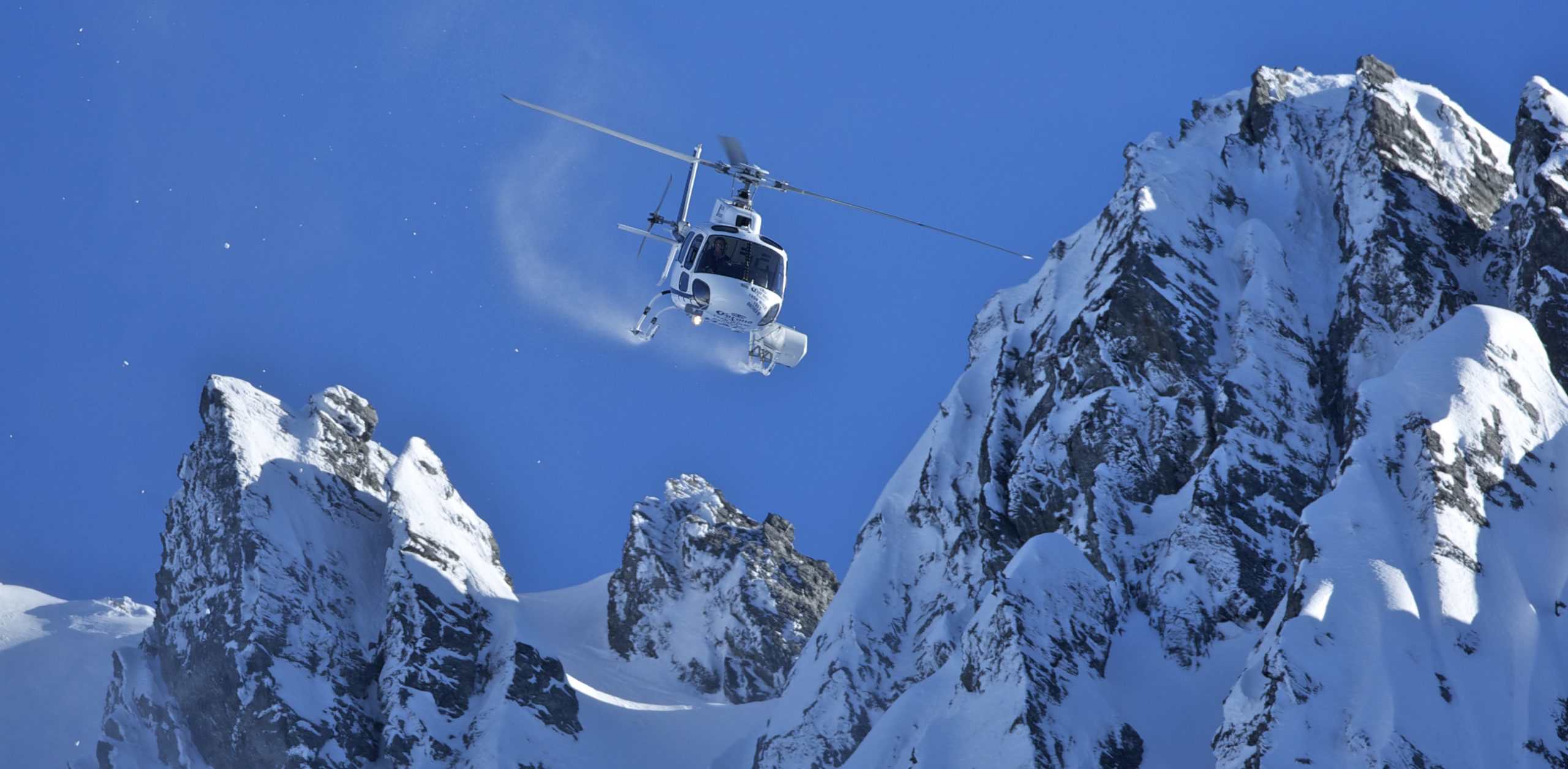
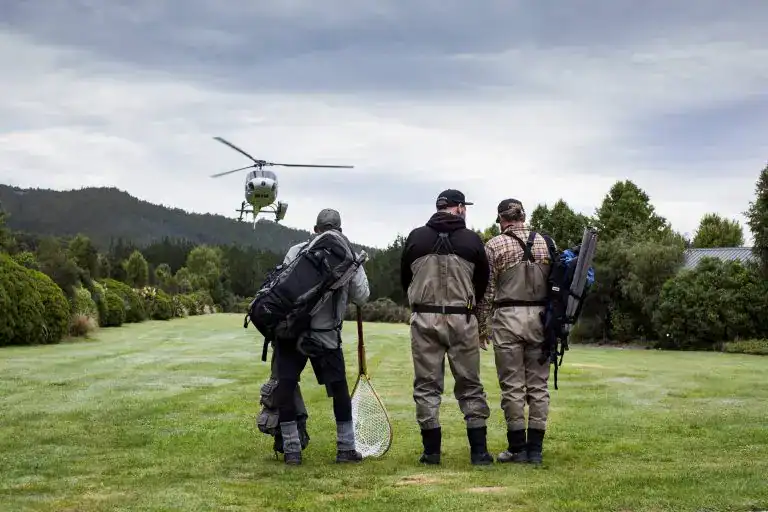
Even within each cost category there are levels of exclusivity (private wine tasting and meet the wine maker, private Owners Cottage, exclusive tours, etc.) Fishing trips may also include helicopter access to rivers with your guide.
We have clients who will spend many tens of thousands USD on a trip to New Zealand and experience the most exclusive tours and private wine tastings and stay in the best accommodations available. We also have clients who will spend $10k USD on a trip to New Zealand and fish for a few days and be quite happy doing day hikes.
In a single word: changable.
New Zealand’s seasons are the reverse of the Northern Hemisphere.
Spring weather begins in October, the warmest summer months are January and February, and March and April are considered Fall.
The climate ranges from sub-tropical in the North to temperate in the South. Rain can occur at any time.
New Zealand is a beautiful country and any time of year is a great time to visit. Do it before you can’t fish these gorgeous river!
Secretly, although many North Americans understandably want to fish at the height of the summer (and the dead of the winter in the USA), there are probably better times to fish.
October until mid-November is the start of the season and while there is less pressure on the water, the weather can be windy and unstable. Where one fishes is important, as rivers can get blown out.
Mid-November until Mid-December is probably the best time taking everything into consideration. Accommodations will be less expensive and less crowded and the fish are well rested and very aggressive. Spring is in the air (meaning warmer days) and pressure on the water is less than in the summer time.
Mid-December until mid-January is like in the States. Christmas and New Years is a time when many Kiwis will take time off. Unlike in the States, this time lasts until about the second week in January. With many families visiting the mountains, lakes and the beach, and generally doing the same activities as people in the States would do on July 4th, accommodations and restaurants are at a premium.
Mid-January until February is the height of the summer. This is the most popular time to be in New Zealand.
March until Mid-April is the end of the fishing season for most of the country and the tourist season is over in all but the larger cities. At this time the water levels in the rivers will be lower. Choice for flies are back to large drys. There are usually not many windy days and it’s a beautiful time to watch the leaves start to turn throughout the country.
Mid-April until September is the winter but there are options to still fish in certain locations. Think lakes in the coldest months. While many rivers will be closed, trout are spawning and large fish are targeted as they enter the rivers from the lakes.
Self-driving in New Zealand is a great way to see the country. A few things to consider:
From Oct.1, 2019, all visa-waiver travelers (including from USA and Canada) must hold a passport (valid for three (3) months past date of departure from New Zealand) & an Electronic Travel Authority (NZeTA). This is a border security and facilitation measure.
When entering New Zealand, declare any fishing gear on the Biosecurity questionnaire. They will inspect the gear and may disinfect it if necessary. Pack your gear accordingly for easy access and inspection. Biosecurity is a quick process to protect New Zealand's environment.
New Zealand’s seasons are the reverse of the Northern Hemisphere. Spring weather begins in October, the warmest summer months are January and February, and March and April are considered Fall. The climate ranges from sub-tropical in the North to temperate in the South. Rain can occur at any time.
Practice, practice, practice! Casting in New Zealand can be pretty demanding and if you are like many anglers, you will out on the river 3 days in a row. Since you are making the trip and takingthe time to chase big fish, you will want to be as ready as possible when the time comes.
In a local field/ school playground practice casting with a 15 foot leader and a piece of yarn on the end. Put a ball cap about 35 feet in one direction and then another 25 feet away. Your goal should be to cast into the hats. The casts in New Zealand will not be too long in length, but accuracy and limiting the number of back casts is beneficial to saving your arm and avoiding spooking the fish. Once you have mastered your cast… do so in the wind.
New Zealand is a beautiful country and any time of year is a great time to visit. Do it before you can’t fish these gorgeous river! Secretly, although many North Americans understandably want to fish at the height of the summer (and the dead of the winter in the USA), there are probably better times to fish.
October -> Mid-November This is the start of the season and while there is less pressure on the water, the weather can be windy and unstable. Where one fishes is important, as rivers can get blown out.
Mid-November -> Mid-December This is probably the best time taking everything into consideration. Accommodations will be less expensive and less crowded and the fish are well rested and very aggressive. Spring is in the air (meaning warmer days) and pressure on the water is less than in the summer time.
Mid-December -> Mid-January Like in the States, Christmas is a time when many Kiwis will take time off. Unlike in the States, this time lasts until about the second week in January. With many families visiting the mountains, lakes and the beach, and generally doing the same activities as people in the States would do on July 4th, accommodations and restaurants are at a premium.
Mid-January -> February The height of the summer. This is the most popular time to be in New Zealand.
March -> Mid-April The end of the fishing season for most of the country and the tourist season is over in all but the larger cities. At this time the water levels in the rivers will be lower. Choice for flies are back to large drys. There are usually not many windy days and it’s a beautiful time to watch the leaves start to turn throughout the country.
Mid-April -> September In the winter there are options to still fish in certain locations. Think lakes in the coldest months. While many rivers will be closed, trout are spawning and large fish are targeted as they enter the rivers from the lakes.
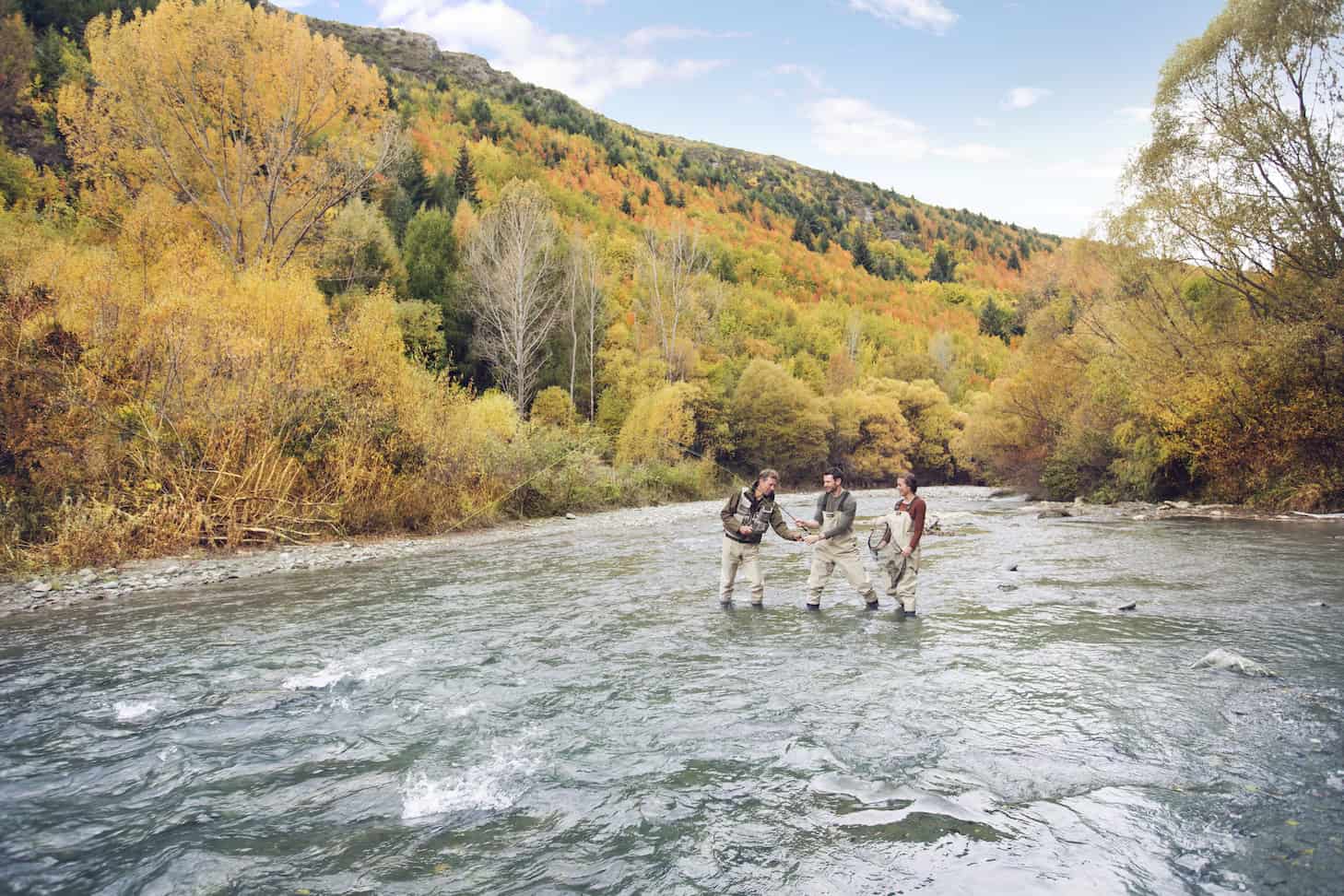
An important aspect of our service is matching you with the correct guide. Experience, personality, how adventurous you would like to be, and fitness level are all parts to that process.
In some cases you will hike, wade and navigate banks with your guide 3-5 miles. It can be physically demanding and rocks can be slippery, so being nimble may be required. In more extreme cases you will be hiking deep into the bush and camping overnight to access water seldom fished.
However, there are ways to address those who are less ambulatory via the use of flat-bottomed jet boats to help you reach waters you would not normally get to fish. Guides who are well-versed working with less mobile people will have a plan- so you are safe and have a great day on the river.
Accommodations in New Zealand range from the super luxurious to the more budget-minded, self-catered apartments and cottages. While pricing does fluctuate due to the exchange rate against the $USD and normal inflation, below is an idea for the range of costs:
In one word: Exclusivity. These are world-class luxury amenities, fantastic scenic locations, expansive properties and service expected from the best boutiques in the world.
With perhaps a dozen deluxe suites being the usually the “norm” for the size of the property, options exist from rooms in the main building to more exclusive on-property Owner’s Cottages and private residences ranging to $30k+ / night. These properties are the pinnacle of privacy and grandeur within the country.
With anywhere from 4- 10 rooms, fly fishing lodges range in their appointments but all offer authentic Kiwi hospitality. Fishing lodges are there for one purpose- to cater to anglers. Think deep leather arm chairs, dark wood paneled walls, libraries of fishing books, fly fishing décor, and always situated near a moving river. When you come off of the water you can hang your equipment in a well-appointed mudroom, where your equipment will be cleaned and dried for tomorrow.
Full breakfast and dinners are usually included with your stay. Rooms may be shared with another person (the super king beds will separate to accommodate two people) and meals are taken with the other anglers staying at the lodge. Usually your guide will meet you for dinner on the night prior to your first day of fishing and anglers will usually stay anywhere from 4-7 nights in order to fish an area.
Hosted rooms or cottages on the property of a working farm (usually sheep) managed by the family and owner of the farm itself. Charming, salt of the earth, unassuming and honest straightforward people- the Kiwis master the art of being a great host, a skill all but lost in the go-go modern United States. B&Bs are an invitation into something that almost feels out of yesteryear. The number of rooms is usually under 10, and often 3 or 4.
As in the US there are vacation rental and room-stay sites that offer accommodations in New Zealand. The value of using our service is that we personally vet locations and have a relationship with the owner/host for the property. Mitigating risk of traveling to New Zealand only to stay in a less than desirable accommodation is one of the reasons to contact us. A few possible issues that may exist with online vacation rentals are:
To understand New Zealand more intimately we believe one must get to know the people of the country. The art of being a good host is somewhat lost in the United States, with massive hotel chains and “loyalty points” programs dictating where we stay, yet providing a similar experience whether in Chicago or Atlanta.
New Zealand does not have the superhighways of North America. Thus, similar to the historic Route 66, roads in NZ retain a culture of roadside motels and B&Bs where travelers spend a night or two. American families once depended on this style in their travel out West, post-WW2. No, B&Bs and motels of New Zealand are unfamiliar to most American travelers under the age of 50.
Anglers stay at a fly fishing lodge for any number of reasons. Fly fishing is a niche sport and those that enjoy the outdoors probably will also appreciate staying at an authentic Kiwi fly fishing lodge. Large hotels are the same around the world, but a lodge will provide comfort and the ability to converse with other people who share the same fishing passion. Who knows… you may learn a thing or two over beers at the end of the day.
The ease of staying at a lodge is also a major consideration. Coming off of the water you can hang up gear, there will be a cold beer waiting, etc. Although lodges range from the super-luxury to the more basic all provide comfortable accommodations, prepared meals, ready access to helicopters and guides.
Lodges will have lead guides who communicate daily and share which pieces of water have been fished and when. Guides will have logs to chart catches, flies, time of day, etc. At night groups of guides within lodges will share information and arrange themselves for the next morning. Dr. X wants to heli into River Y? So does Mr. Z! Why not split the cost between them by sharing the flight time?
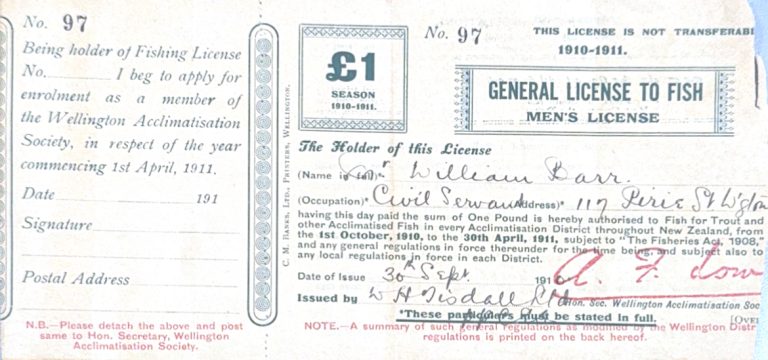
There are two kinds of fishing licenses available for visitors to New Zealand: Fishing One Day License and the Non Resident License.
Fishing with the ‘wrong’ license is considered the same as fishing with ‘no’ license; both actions are punishable by a maximum $5,000 NZD penalty. New Zealand DOC (Dept. of Conservation) is tasked with ensuring the fisheries and waters are maintained for years to come and this is all of our responsibility to remain diligent.
Practice, practice, practice! Casting in New Zealand can be pretty demanding and if you are like many anglers, you will out on the river 3 days in a row. Since you are making the trip and takingthe time to chase big fish, you will want to be as ready as possible when the time comes.
In a local field/ school playground practice casting with a 15 foot leader and a piece of yarn on the end. Put a ball cap about 35 feet in one direction and then another 25 feet away. Your goal should be to cast into the hats. The casts in New Zealand will not be too long in length, but accuracy and limiting the number of back casts is beneficial to saving your arm and avoiding spooking the fish. Once you have mastered your cast… do so in the wind.
Although New Zealand has not traditionally been a country of tipping North American tourists have changed this over the past number of years. However, in all cases tipping is for appreciation and a set minimum is not always expected.
Restaurants: Most restaurants now have a line for gratuities on the credit card charge slip. However tipping should be reserved for fine dining, as a sign of appreciation for excellent service. 10% is a very decent tip in this case in a fine dining restaurant, but there is no set rule for a percentage. The wait staff does not split tips with the rest of the staff at the end of the night.
Fly Fishing: Fishing guides are another story today, and many not only appreciate tips but expect them. However, expectations can vary between $50 and $100 for a full day on the water. If you are pleased with the level of service and attention provided in a lodge a suitable tip for house staff would be in the region of NZ$10 at the end of your stay- left on the dresser.
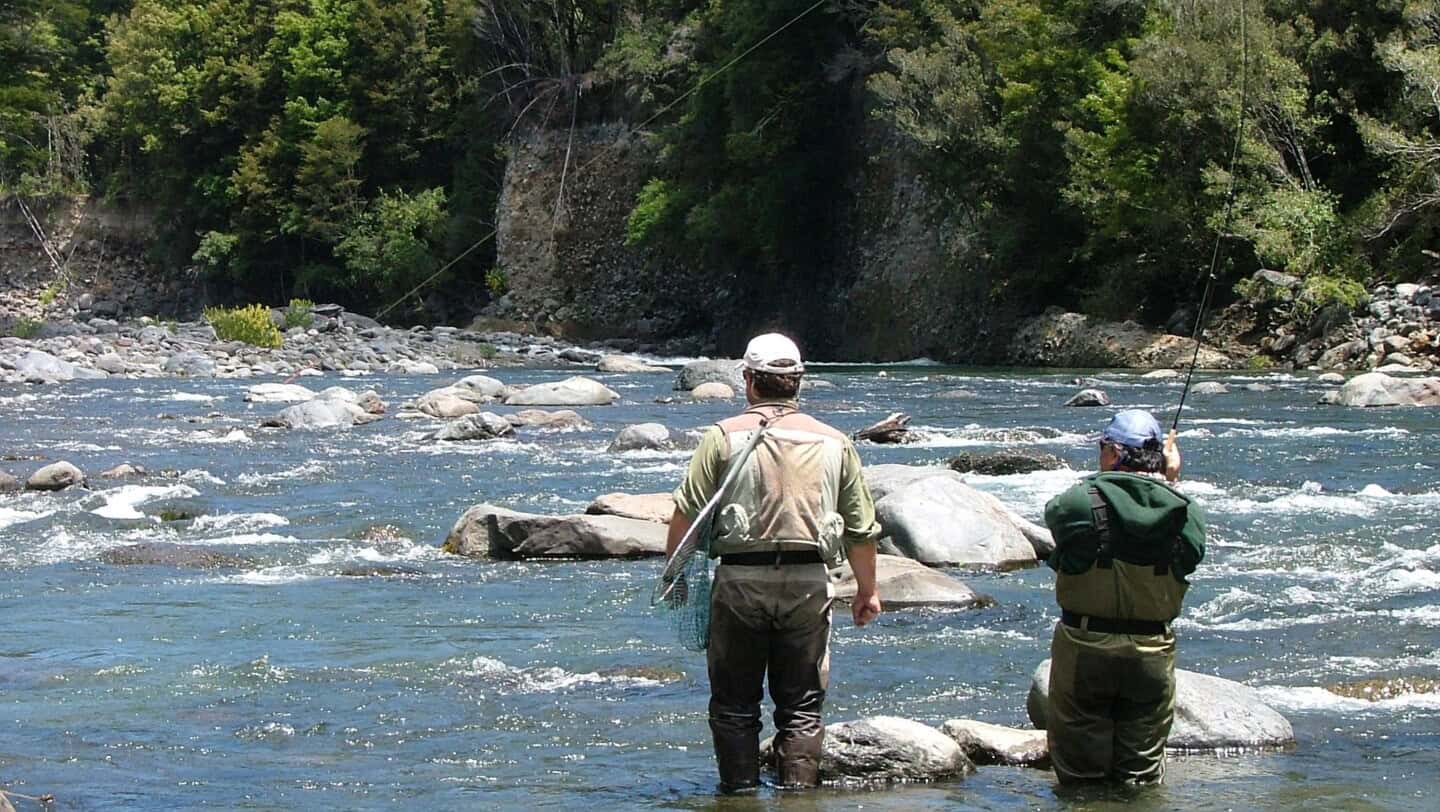
The number of fish per mile in New Zealand pales in comparison to that which can be found in the USA. So casting to a pool which “should” have fish will not be enough. Sight-fishing is required- meaning that one must spot and cast to a specific fish. New Zealand guides are professionals (not summer hires or part-time college students) and the best in the world at spotting fish in turbulent water. Even the most experienced visiting anglers will not know the beats as well as a local guide that has grown up in the area. Yes, if one is experienced they will be able to spot and cast to fish, but not at the ratio as if you had a guide who does it on a daily basis.
The bottom line is that you have traveled a long way to cast to large fish in New Zealand. Our advice is not to be penny wise and pound foolish. Your time will be used most efficiently with someone to guide you. The reason you are there is to catch fish. Increase your chances of doing that.
Be honest and have open dialog from the outset. The best way to work with your guide is to be frank about your experience, casting skills, fitness and goals. One of the reasons why we suggest a few days fishing with a single guide is to get over the forming/ storming/ norming of relationship building so you can more quickly get to performing together. Creating trust and leveraging the guides skills is very important.
Allow the guide to do his job. These guys stalk fish all summer long and rarely take a rest unless they sense the client is tiring or it’s time for lunch. Allow the guide to spot the fish ahead of you by remaining down river a few yards… and stay low/ out of the vision of the fish! The last thing the guide wants is to spot a beautiful fish only to have the client spook it by being clumsy and doing something that could have been easily avoided by just taking your time and thinking about your actions.
Wader: Most of the time you will want to wear waders. Guides can provide these for you if you don’t want to lug yours along. In the summer months, if you have lightweight waders use them… the sun is strong it can be warm! However, this said the next land mass south of New Zealand is Antarctica, so cool breezes can move through the Southland later in the afternoon. Wearing waders will also help protect you from the bush as you walk to the water.
Wading boots: Didymo (Didmosphenia geminate) aka “snot rock” is a type of algae first reported in New Zealand rivers in the mid-2000s. It is considered a foreign nuisance and the Dept. of Conservation is doing whatever it can to study and prevent it from spreading. As of the fishing season in 2008, felt boots are not allowed in the country. So bring only your rubber-soled fly fishing boots or they will be confiscated! Although Didymo does not have a reported negative effect on the number, or how large fish are, it is foreign to the ecosystem and thus a bio-hazard.
Sun Mask (Buff) and Sun Gloves: The South Island of New Zealand has very strong sun. Bring sun protection for comfort.
6-weight is the fishing larger rivers or in more windy conditions.
5-weight is a bit light but can be used in light wind conditions.
Your guide will have patterns upon patterns prepared and you are definitely not expected to bring your own flies. However, there are many books and online resources about fly patterns, and new fly patterns, and secret fly patterns, and what fly patterns are working on what rivers, and when, etc. etc. We suggest that if you would like to tie and bring your own to New Zealand you should expect to bring a few rows of terrestrials as a starter.
Note: Raw skin and necks will be subject to inspection and fumigation upon arrival, so we suggest only bringing finished tied flies. In the past New Zealand used to prevent any flies from entering the country however this is not the case today.
In the past, wet wading was common in New Zealand due to limitations of waders. If it's hot enough in the height of the season it will still happen. However, breathable waders are now preferred for sun protection, bug protection, and abrasion resistance.
Top 10 Fish to Catch in New Zealand: What You Can Catch and Where
New Zealand is a fishing enthusiast`s paradise, boasting diverse fish species across its pristine coastal and freshwater environments. Whether you’re an experienced angler or a curious traveler looking to cast your first line, here’s an overview of the fish you’re likely to encounter and where to find them.
Link in Bio to Read More!
https://www.bestofnzflyfishing.com/fly-fishing/top-10-fish-to-catch-in-new-zealand/

Top 10 Fish to Catch in New Zealand: What You Can Catch and Where
New Zealand is a fishing enthusiast`s paradise, boasting diverse fish species across its pristine coastal and freshwater environments. Whether you’re an experienced angler or a curious traveler looking to cast your first line, here’s an overview of the fish you’re likely to encounter and where to find them.
Link in Bio to Read More!
https://www.bestofnzflyfishing.com/fly-fishing/top-10-fish-to-catch-in-new-zealand/
...
Why Te Arai Links Is More Than a Golf Resort
Te Arai Links may be best known for its world class coastal golf, yet focusing solely on the fairways misses much of what makes this Northland retreat so special. Set between sweeping sand dunes, native bush and the Pacific Ocean, Te Arai Links offers a diverse range of experiences that appeal to far more than golfers alone. Whether you are travelling with a non golfer, planning a longer stay, or simply looking to slow down and explore the region, Te Arai Links delivers a well balanced mix of relaxation, adventure and nature....
https://www.bestofnewzealandgolf.com/activities/why-te-arai-links-is-more-than-a-golf-resort/
Why Te Arai Links Is More Than a Golf Resort
Te Arai Links may be best known for its world class coastal golf, yet focusing solely on the fairways misses much of what makes this Northland retreat so special. Set between sweeping sand dunes, native bush and the Pacific Ocean, Te Arai Links offers a diverse range of experiences that appeal to far more than golfers alone. Whether you are travelling with a non golfer, planning a longer stay, or simply looking to slow down and explore the region, Te Arai Links delivers a well balanced mix of relaxation, adventure and nature....
https://www.bestofnewzealandgolf.com/activities/why-te-arai-links-is-more-than-a-golf-resort/
...
The Yamasakis marked a birthday and anniversary the best way we can think of: fly fishing in New Zealand! These photos say it all🐟🏞️
Ready to plan your own fly-fishing trip? Contact our experts today!
#newzealandflyfishing #luxurytravel #flyfishingadventures #newzealandtrip #bestofnzflyfishing
The Yamasakis marked a birthday and anniversary the best way we can think of: fly fishing in New Zealand! These photos say it all🐟🏞️
Ready to plan your own fly-fishing trip? Contact our experts today!
#newzealandflyfishing #luxurytravel #flyfishingadventures #newzealandtrip #bestofnzflyfishing
...
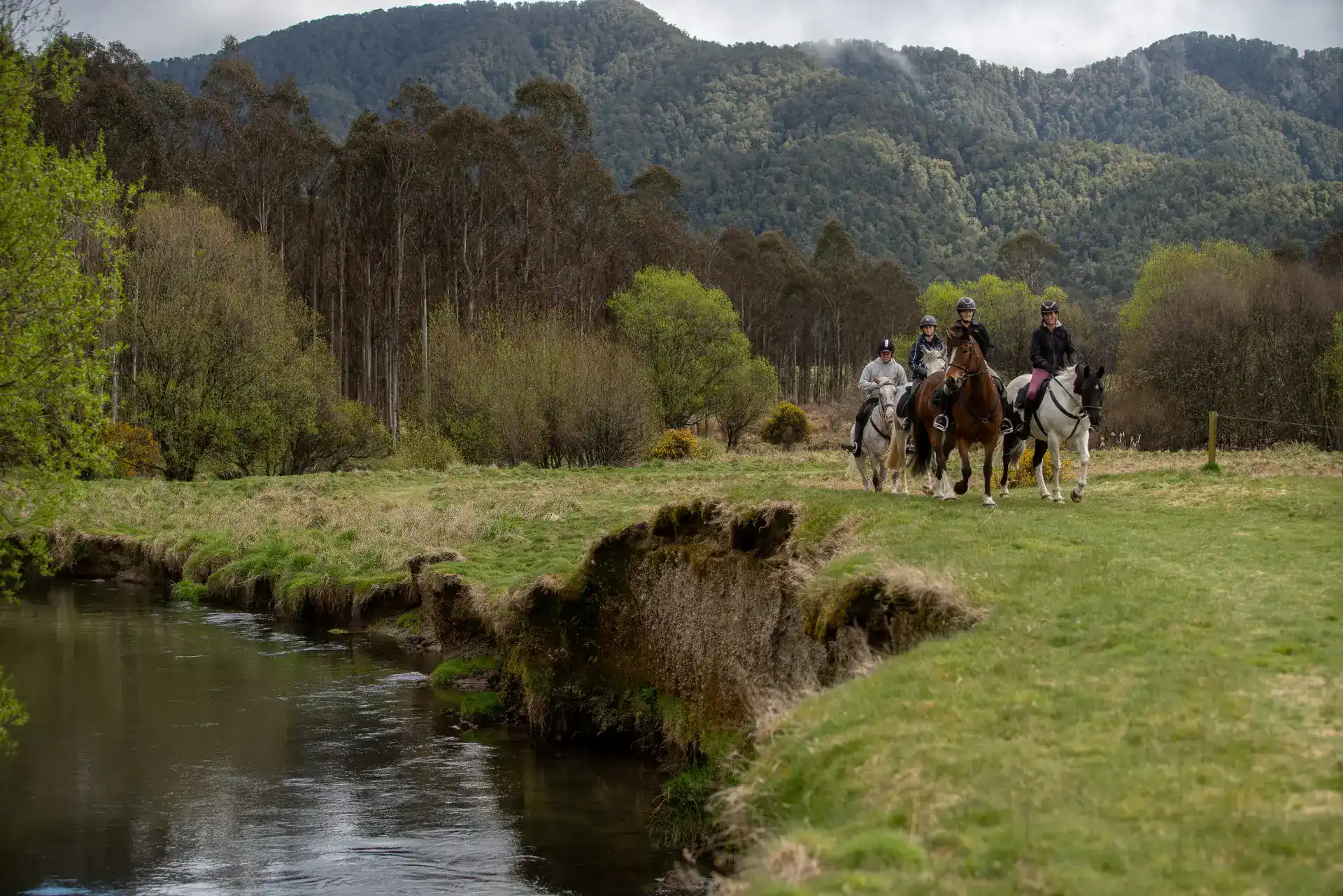
Wonderful photos from the Sabbatinis fly fishing adventure on New Zealand’s South Island rivers!🎣🏞️
#newzealandflyfishing #southislandnz #luxurytravelnz #catchandrealease #bestofnzflyfishing
Wonderful photos from the Sabbatinis fly fishing adventure on New Zealand’s South Island rivers!🎣🏞️
#newzealandflyfishing #southislandnz #luxurytravelnz #catchandrealease #bestofnzflyfishing
...